Ashoor Z.Moradian
Drummer
Report: Antoine Fadavi’s Drum Workshop in Tehran
Ashoor Zafar Moradian
Samt-e Honar: On Thursday, September 10, 2015, a specialist workshop on filming and editing by drummer Antoine Fadavi was held at the Sorna complex.
The workshop, scheduled to start at 3 p.m., began 30 minutes late. Opening the session, Alireza Tabatabaei, director and founder of the Aryan Bass & Drums School, thanked all the music lovers who had made time to attend, voiced his disappointment at the modest turnout for such an event, and noted that Antoine is a talented sixteen-year-old who puts a great deal of energy into drumming alongside his studies and is already a capable drummer whom time will only make stronger and more accomplished. He then invited Antoine to open the program with a piece.
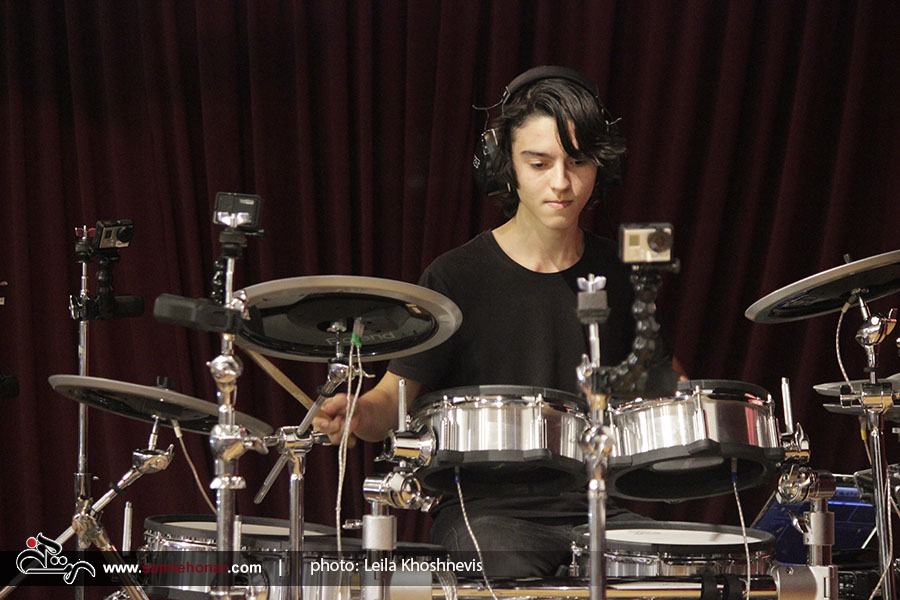
Antoine then took his place at the kit and played. His speed, command and young age amazed the guest musicians, and when he finished he was met with admiring looks and words of encouragement from the audience.
After greeting the audience and thanking Mr. Tabatabaei for making the workshop possible, he said this was the first time he had come to Iran to give a workshop and that his Persian was not very fluent; for this reason Sina Najaflou (a drummer) sat beside him as his interpreter. He then talked with the guest musicians about his experience as a drummer and in filming.
Fadavi invited the audience to ask any questions they had about filming drums so that he could answer them.
Antoine explained that he began “filming” drums at the age of six, under the guidance and influence of his father, a film director, and that he has only been playing for four years.
He said the choice of professional filming equipment depends on your goal, but naturally the more professional the gear, the better and more effective the result. At first, he added, he did it purely for fun, covering songs and posting them, but gradually his work won the approval of “KAT Percussion”, which offered him a collaboration.
Next, Ashoor Zafar Moradian, a drummer (currently active with the Haman band and the orchestra of Mazyar Fallahi), asked Fadavi about the differences between working with electronic and acoustic kits, how much time should be set aside for building a melody, blending the sounds of the instruments together, and recording. He added that he had personally experienced all of this and was only raising the questions for the benefit of the others. Antoine replied that working with an electronic kit is naturally easier, faster and very good, but the feel conveyed by an acoustic kit cannot be ignored; still, if a commission has to be delivered urgently, producing the track electronically is the best option. He also stressed that during production we must make sure the whole picture we present is at the same professional level, because any mistake calls the entire work into question.
When producing a track, you have to keep it relaxed and flowing, because it matters a great deal that people will watch your videos and clips and may offer you work.
He went on: before starting, I test the kit once to check how it blends with the whole track and all the accompanying instruments.
When recording an electronic kit, too, I practise until I am sure I can handle it completely, then record the music, and if necessary I go back and keep practising.
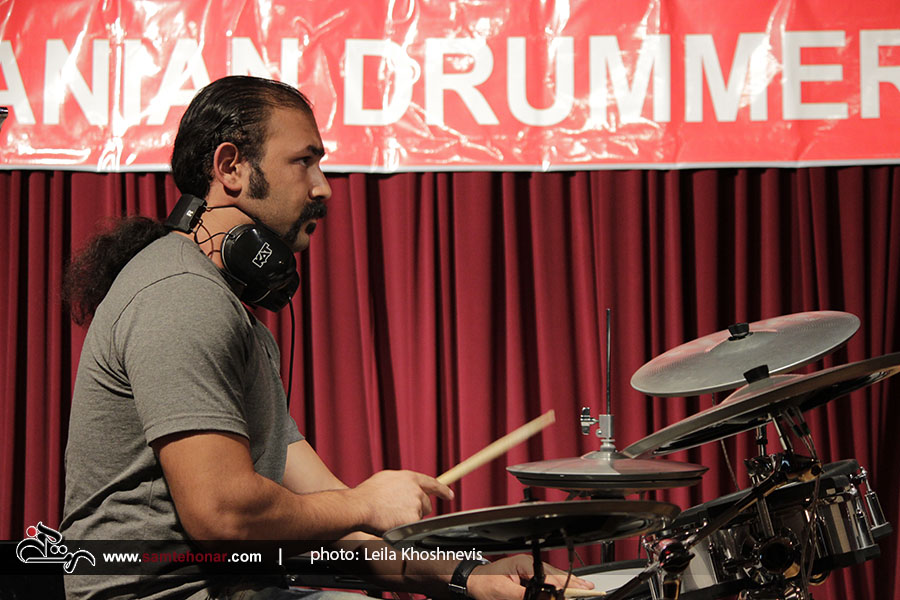
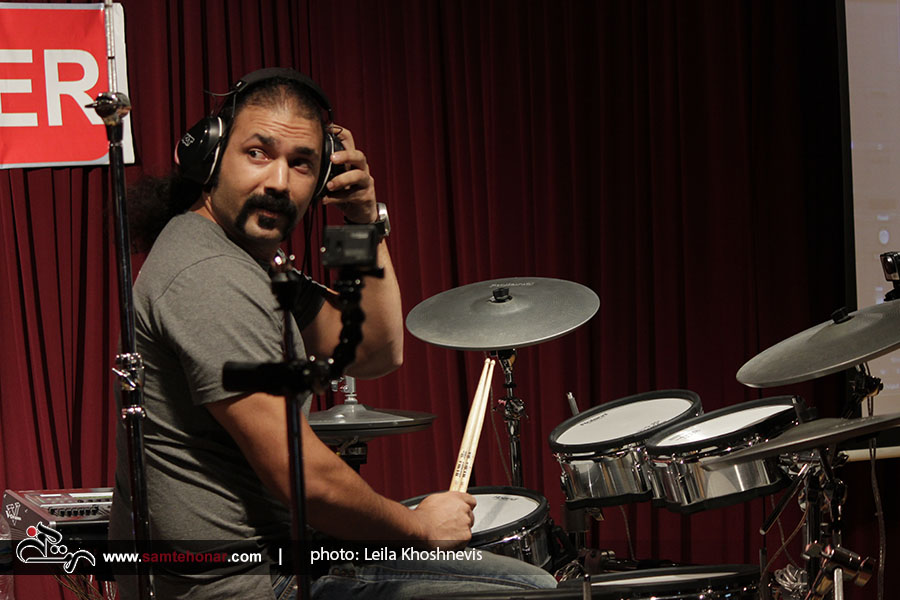
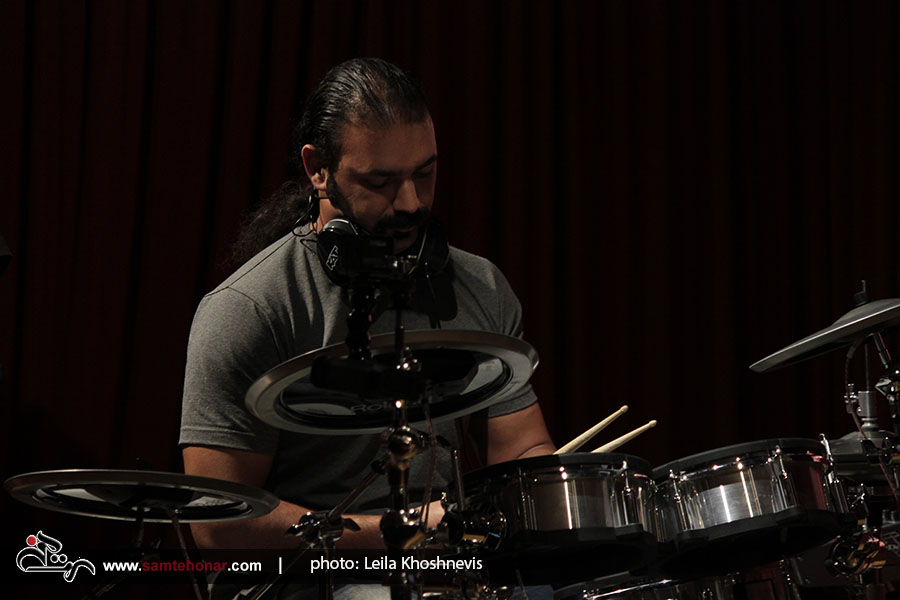
At the start of the second part of the workshop, Ashoor Moradian was at the sound check, preparing a piece to perform for us at the opening of this part of the session.
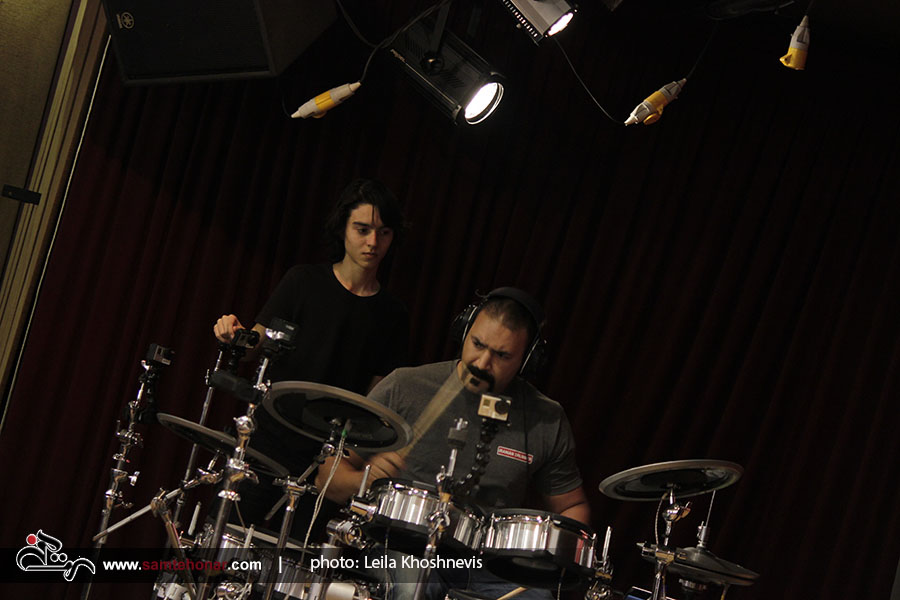
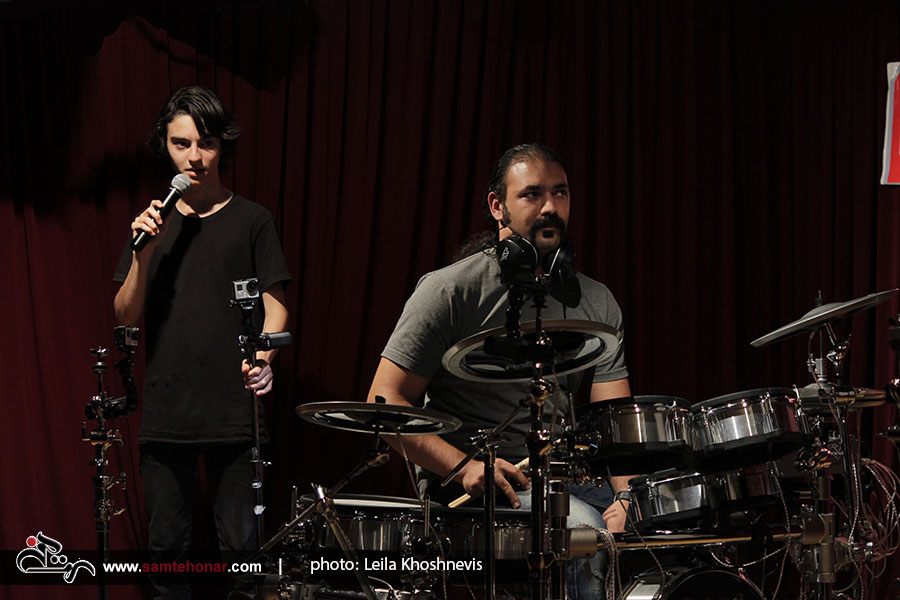
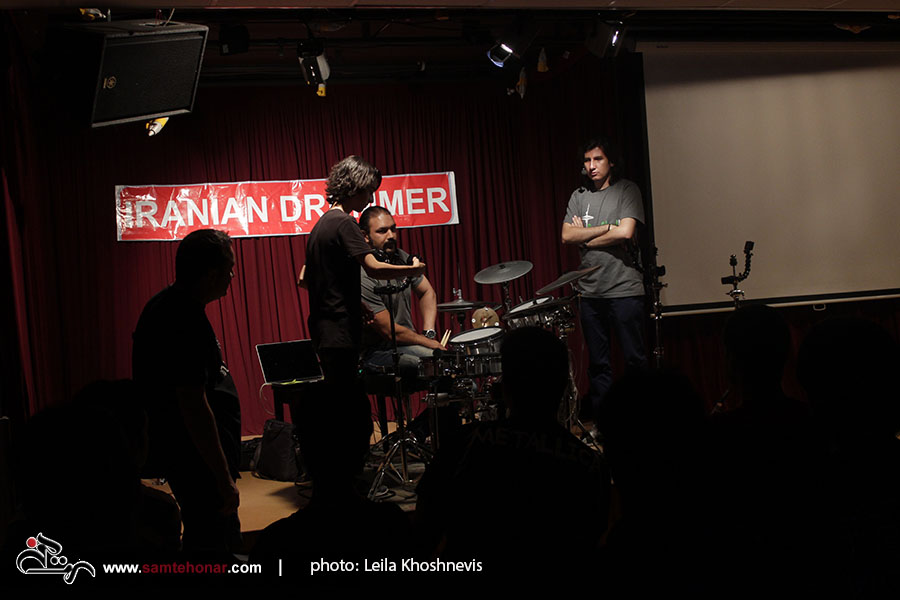
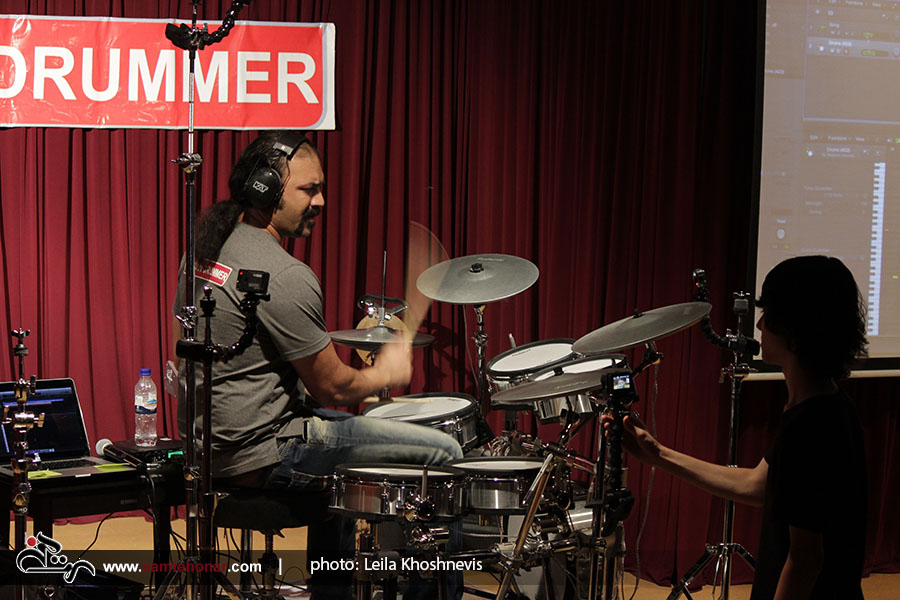
Meanwhile, Antoine was setting up cameras in suitable spots, at appropriate and varied heights all around the kit. He said that for bigger projects it is best to use four high-quality cameras, one of them handheld and moved around the kit. He stressed that the first step is getting the cameras, and the second step, which few people pay attention to, is copyright, because many websites remove cover songs.
He continued that he first posts a track on the websites, and if they do not take it down, he publishes the actual work. Although some sites sell cover licences for certain songs, he himself chooses songs with little or no copyright restriction. The next steps, he said, are editing and placing the cameras at three key visual points, which is exactly what we are doing now.
Asked about cameras appearing in each other’s shots, he said that when placing cameras all around the kit, we try as far as possible to keep them out of one another’s frame (so that a lens does not capture the camera opposite it), but if it does happen, it is not a big deal.
He then said: we record the track, and once it is recorded we start mixing and mastering.
Next, Ashoor Moradian played us a few seconds of a new piece soon to be released by Haman Band, while Fadavi demonstrated the filming process live. Fadavi went on to talk about “editing” websites and software, then once again thanked the guests Sina Najaflou (“interpreter”), Alireza Irannejad (“Sorna public relations”) and Alireza Tabatabaei (“director and teacher at Aryan Bass & Drums”). Expressing his pleasure at taking part in this several-hour workshop, he closed the session by wishing every participant success.